

What Pottery Taught Me About Time
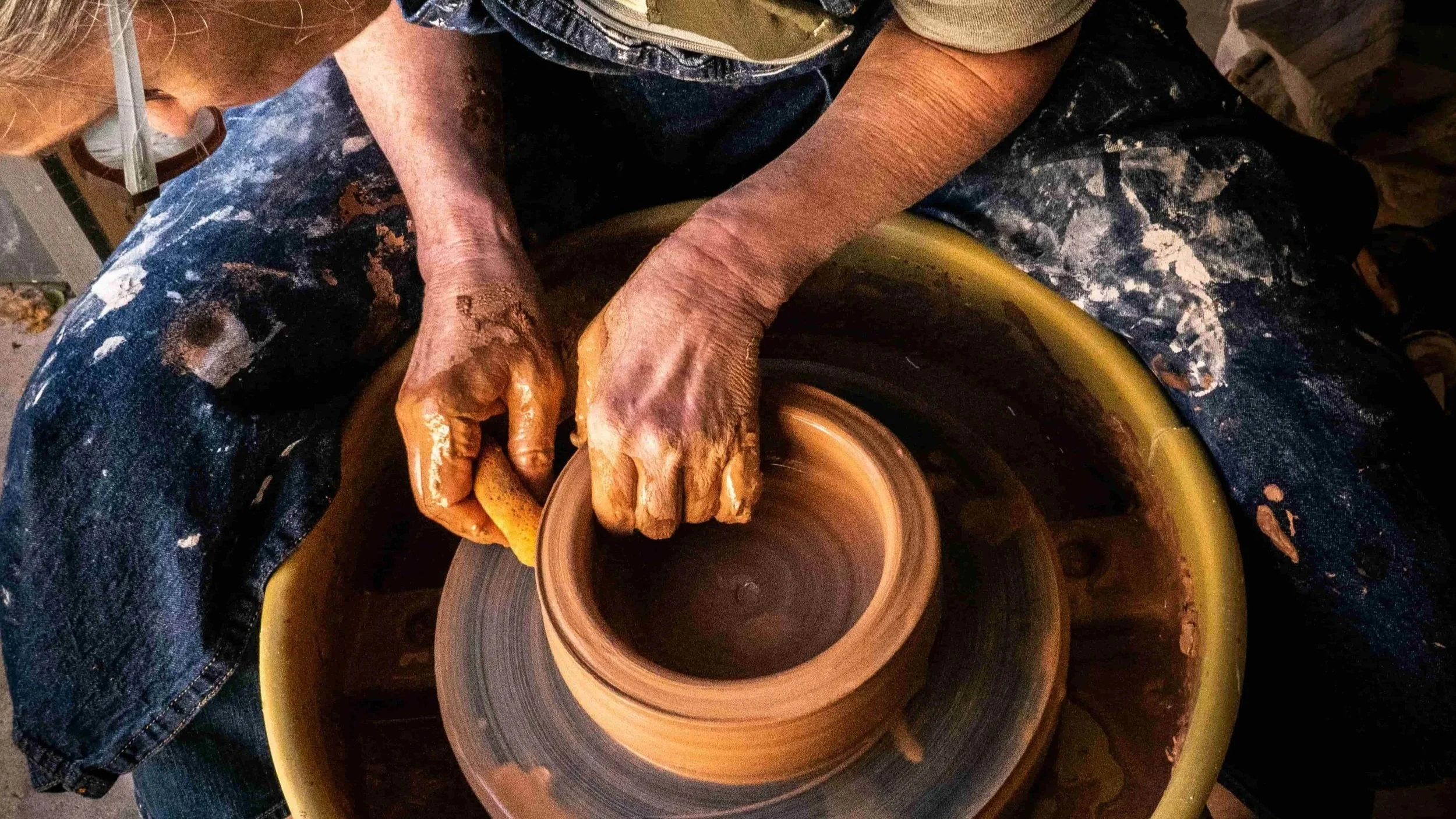
Photo by Earl Wilcox on Unsplash
TL/DR:
My pottery practice has taught me more about time that I could have anticipated:
Rushing usually backfires. Going too fast tends to create more problems than it saves, so patience often saves time in the end.
Things take as long as they take. You have influence over your time, not control, and most folks are terrible at time estimation. Plan for that, and check in instead of forcing it.
Not everything is precious. Letting go of what didn't work frees up energy for what's next, and you could always try again.
It's rarely all or nothing. When plans go wrong, adapt or salvage what's left instead of scrapping the whole thing.
The Whole Shebang:
For someone who’s a time management, productivity and stress reduction coach, you may have noticed that I talk about pottery. A LOT.
It’s the thing I spend the most time on (outside of my work and my family).
And, since I started (er, became absolutely obsessed) with pottery a few years back, I’ve learned how to throw and hand build and trim and glaze. Practical skills of the trade, all.
But I often find myself thinking about how my obsessions (pottery and time) interact with each other. And there are a few key things (lessons, if you will) that I come back to over and over. That I can’t stop thinking about.
Because pottery has taught me many lessons far beyond those technical skills. Or rather, it keeps reinforcing them.
Because some lessons have to be learned (at least for me) over, and over and over.
So, here’s what pottery is trying to teach me about time (and life!):
Patience
Well, I can’t say I’ve really learned patience. But it’s definitely what pottery is trying to teach me.
Look, no one would describe me as a patient person. I like to get things done. To move things along.
I get very annoyed at slow walkers. I often find myself 1/2 a block ahead of my family before I realize it. And I swear I’m not trying to be rude. I just still walk like a New Yorker, even though I left New York in 2003!
I like to get things done and move on to the next. I’m not a perfectionist by any stretch (because it would take too long!) and I learned long ago that the only one who even noticed the difference between 90% and 100% (or, 99%, let’s be real, because perfect isn’t possible anyway)…is me.
But in the studio, I’m confronted with WHY patience is important, over and over again.
If I pull my walls too fast, I get a thin spot, which often leads to wobble, and then collapse.
If I try to trim a piece when it’s not quite dry enough, I gouge it, or deform it.
If I try to dry a piece too fast, it cracks before it even gets to the kiln.
The solution for all of these issues: patience.
It takes as long as it takes
A close cousin to patience is the idea that it takes as long as it takes. Because while I have influence, I don’t have control.
And there are lots of other influences, beyond me.
Things taking longer than you want or expect is something that comes up with my coaching clients. A lot. They get frustrated when they think something should take a certain amount of time, but it takes more. (Interestingly, no one is too pressed about it when things take less time than expected. But perhaps that’s because it happens so rarely.)
Why do things take more time than we want them to, than we plan for? Lots of reasons:
Once you get into it, it’s more complex than you thought.
Or you were tired that day.
Or you got interrupted a lot.
Or there was an emergency that took you away from your plan.
Or, you were simply overly optimistic in your time estimation. (Because, IMHO, most humans are terrible at time estimation!)
And, pottery reminds me of this daily.
It was frustrating to me at first that there wasn’t easy math I could apply to when I could proceed with different steps of the process. But I’ve gotten used to it. I’ve learned that things simply take as long as they take.
When will my pot be dry enough to trim?
Well, it’s not simply “2 days”.
Often, it’s 2 days, but sometimes it’s longer because it’s been cold and humid. Or it’s shorter because it’s been hot.
And sometimes it’s shorter because the pot’s walls are on the thinner side. And sometimes it’s longer because the walls are thicker, or it’s a bigger pot overall.
How much longer? I don’t know; it’ll be ready when it’s ready. It'‘ll take as long as it takes. And while I can make minor adjustments (like adjusting the plastic that covers it) or using a torch to try to speed it up, the best thing I can do is keep checking in.
When will my pot come out of the bisque firing and be ready to glaze?
Well, it depends.
It depends on whether I got it to the shelf right before a kiln was filled, or right after.
It depends on when the next kiln is running.
It depends on how much stuff other people had on the shelf already, before I put my pot there.
It takes as long as it takes.
Letting go
Ok, I’m not exactly sure that this one is about time, but it’s still a lesson about life and maybe the biggest, most impactful one for me. So I hope you’ll allow me the slight diversion.
Pottery teaches me to let go. Over and over. That not everything is precious. That I can do it again.
In the beginning, when I had little experience, every pot was a minor miracle. No matter how bad, I was proud. I gave away very heavy tiny objects as treasured gifts. Trimmed it all. I fired it all. I glazed it all. I kept it all.
But I’m learning, over and over, to let go. And the freedom that comes with not holding on too tightly.
I’m often reminded of that quote I’ve seen all over social media, and to whom I’m not sure to attribute: “I am consistently surprised to find that the process of trial and error involves error.”
I might try to make something bigger, taller, wider, or in a shape that’s new to me. And I probably won’t succeed on the first go around. I will need to start again. And again. And that’s OK.
Recently, I felt that I was truly starting to internalize this lesson when, after spending time throwing, trimming, and drying a pot I really like, I accidentally dropped it on the floor, as I was on my way to put it onto the shelf to be loaded into the kiln. I’d put in significant effort, but the drop ruined it. It wasn’t salvageable. And so, I cleaned the shards off the floor and dropped it in the bin for the clay to be recycled and reused.
And while I admit I felt a tiny twinge of “oh no”, it was incredibly fleeting. Instead, I let it go. It didn’t deserve a big emotional response from me. Because if I liked it that much, I could make it again.
And I find myself thinking about this in the rest of my life as well.
“Oh no! The dinner I cooked wasn’t as good as I would have liked.” Let it go; move on, I tell myself.
“Oh no! I didn’t get the contract! “ It’s ok; let it go, move on. There’ll be another.
As I write this, I guess I’m just relearning one of the central tenets of Buddhism, over and over: I’m practicing non-attachment in the pottery studio, and it’s having knock-on effects in other parts of my life.
It’s not “all or nothing”
And lastly, and perhaps the other side of the coin of letting go, is that it’s not “all or nothing”. Disaster can be averted (or converted into something else!). Things are usually more fixable than they seem.
All-or-nothing thinking is super common and it can really throw you for a loop. I’m no stranger to this.
Here are some ways it shows up (outside of the pottery studio):
“I was trying to eat healthy, but I messed up and ate a piece of pizza, so I guess I’ll eat the 1/2 the pie now.”
“I don’t have time for a 90-minute workout at the gym, so I guess I can’t exercise today.”
“This project will take 3 hours, and I don’t have 3 hours today, so I’ll just have to postpone starting.”
And in the pottery studio, I see it even more clearly, because it’s tangible, in my hands.:
“I tried to throw tall, but got a wobble.” All is not lost! I can use 2 ribs, one on either side, to straighten out the wobble. And if that doesn’t work, I can cut off the top and make a shorter pot.
“I threw a big bowl, got a thin spot, and it collapsed in on itself.” All is not lost; I can cut off the part that collapsed and make a cute little snack bowl from what’s left. Or simply re-wedge the clay and make something else altogether. Consider the failed pot practice.
“I threw a closed form pot, and it was wonkier than I wanted.” No biggie! I can lean into the wonk. Make it even wonkier. See an example below of an urn I made through exactly that process.
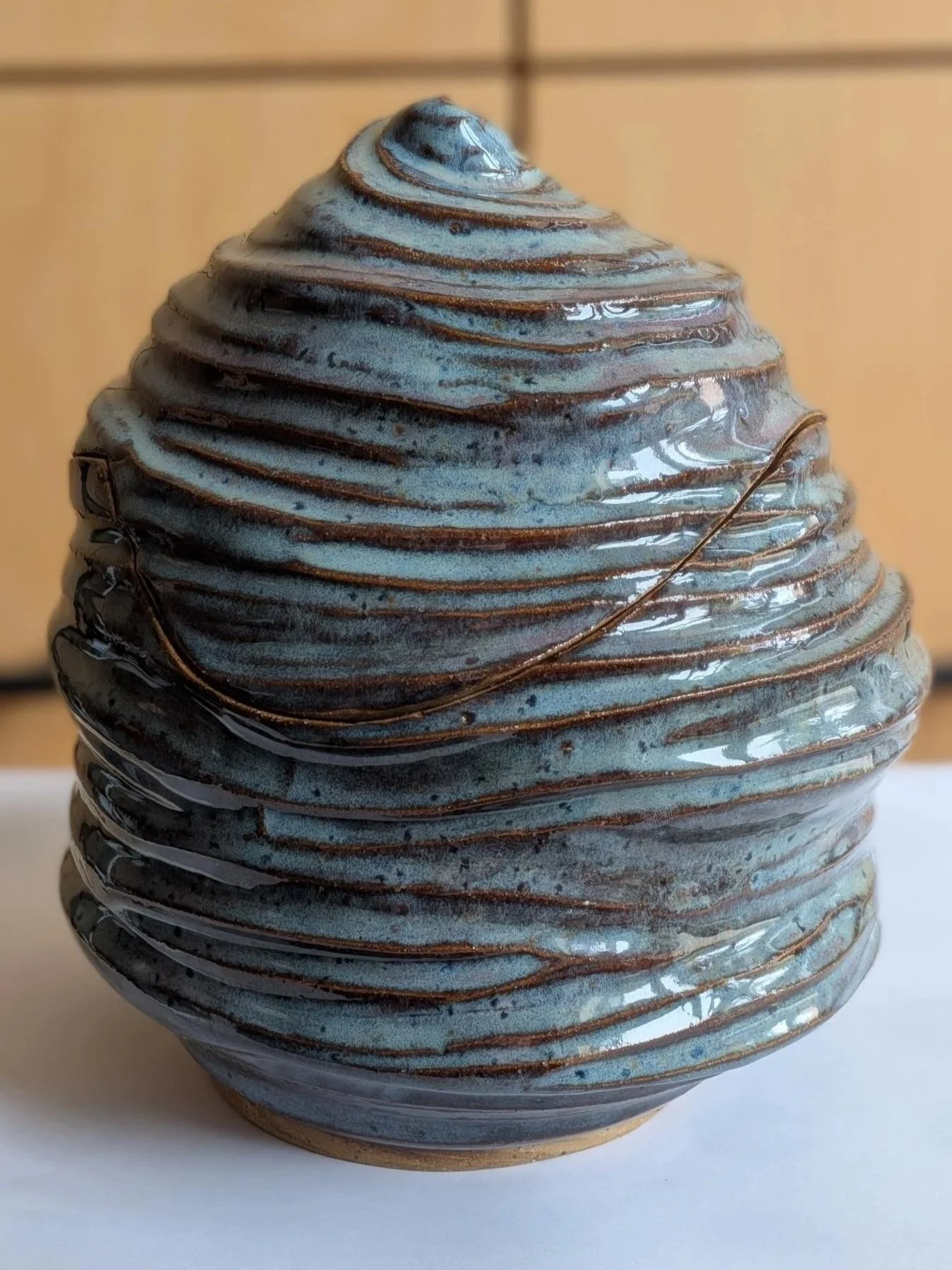
And, if, for whatever reason, it can’t be saved, can’t be adapted? Well, I just go back to the lesson above: letting go.
And because I can’t be the only one learning lessons from my hobby, I’d love to hear from you. Are there lessons you’ve learned in one part of your life (maybe from YOUR obsessive hobby??) that translate to the rest of your life?
It you’re ready to let go of your time related stress, here are 4 ways we can work together:
Download the Do More, Stress Less App
Daily personalized coaching that adapts to your brain, your goals, and your life. Like having a productivity coach in your pocket.
Get started here.Enroll in the Time Well Spent course
Bite-sized, shame-free steps to take control of your time, and your life. Built for real people with big lives, big jobs, or both.
Learn more, or enroll here.Get 1:1 Coaching
High-touch coaching for people managers, leaders, executives and founders who need a trusted partner to streamline priorities, manage the overwhelm, and focus on what moves the needle most.
Schedule a call to explore if this is the right fit for you.Explore Team Workshops/Training
Customized workshops and trainings to help your team improve productivity without burnout and create a culture where people (actually) thrive.
Schedule a call to explore if this is the right fit for you.
