

Photo by Brian J. Tromp on Unsplash
TL/DR:
Email is, almost by definition, a stream of other people’s priorities.
Being “responsive” all day often means being busy all day without moving your own goals forward.
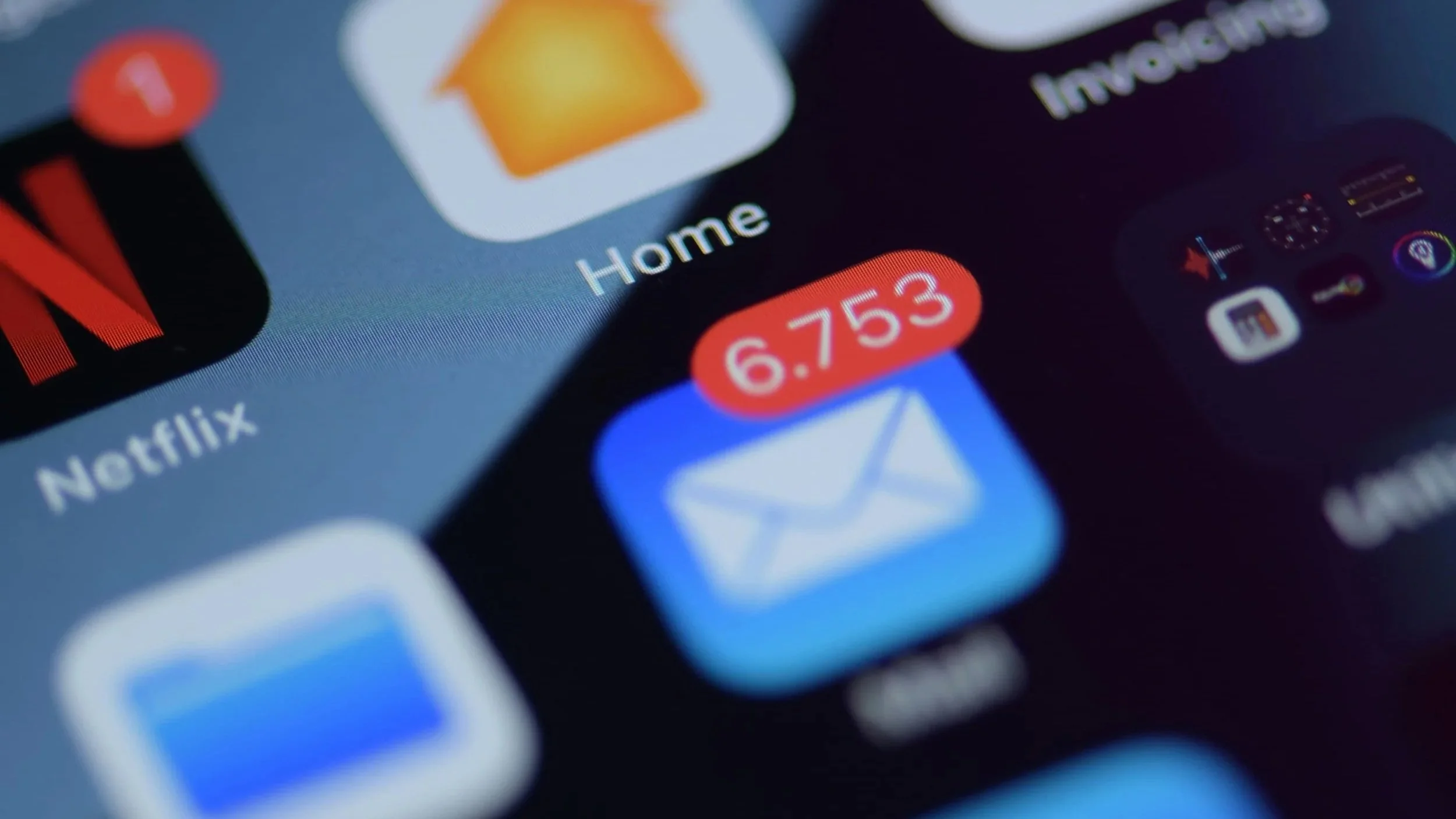
That unread number you swear you’ve stopped noticing is likely weighing on you more than you’d admit.
Letting go of an old backlog isn’t a loss. It’s an honest admission that you were never going back for those emails anyway.
Email is real work that takes real time. Staying on top of it starts with accepting that, instead of hoping to squeeze it in between everything else.
Making time for anything means admitting you can’t do everything. There’s freedom in that, because it makes every choice about your finite time count.
The Whole Shebang:
Email is a scourge on modern society. And yet, it’s almost impossible to opt out.
(And yes, I get the irony that you may have received this essay in your inbox! My goal, as always, is to write something genuinely worthy of your inbox.)
A good friend of mine hates email so much that he doesn’t even have a static email address. If you want to email him, you have to request an email address from his website and then, if he deems you worthy, he will issue you an email address at which to reach him. And that email address will expire. I’ve known him for over 20 years and I’ve still never been issued an email address with an expiry date longer than 3 years out. If I want to email him, I’ve got to re-up.
He’s added friction so that the onus is on me (and everyone else). We have to REALLY want to email him in order to be able to. And yes, it’s a little annoying (although now I just text him so the joke’s on him!), but it works for him. An idiosyncratic professor who can make his own rules.
But what about the rest of us??
I’m willing to bet that in the same breath you’ll tell me that you, too, despise email. And also it’s the first thing you do in the morning. Before you’ve even gotten out of bed. At the very latest, the first thing you do when you open your laptop.
But here’s the thing about email: It is, almost by definition, a firehose of other people’s priorities (OPP, if you will, sorry, couldn’t help myself.)
Look, sometimes those emails are a response to the information you were seeking. But more often than not, they represent what someone else wants from you.
And sometimes, what they want from you aligns with your priorities. But often, it does not.
And you don’t have unlimited time. In fact, your time is very finite.
And so you find yourselves in a conundrum, where it’s important to be “responsive”, but if you’re not careful, you’ll get to the end of the day, having been “busy” all day long, but not having made much progress on your own goals and your own priorities.
Now, based on what I’ve said so far, you might be questioning what my own inbox looks like. Wondering if I’ve given up on email as a communication method.
And the truth is that I’m also a human who lives in this world and therefore must engage with email. And, moreover, I’m an inbox-zero-ish sort of person because, as much as I also despise email and its never-ending nature, being accountable and, yes, responsive, is important to me. I don’t like to leave people hanging and it makes me feel a little unmoored to have more in my inbox than I can handle.
Look, you’ve undoubtedly heard people talk of this mythical “inbox 0” before. And I bet you’ve reacted in one of 2 ways: with a snort and a scoff because you think email diligence is a waste of time, futile at best, or with a feeling of deep envy.
Regardless of how you react instinctually, however, you are likely to think that inbox 0 is not actually possible, at least not without devoting the bulk of your work hours to email.
And I’m here to quell this myth and to tell you that not only is it possible, it doesn’t have to take too long, and it’ll make you feel in control of the onslaught of incoming data you face daily.
Often, when I start working with my clients, they have inboxes that range from a few hundred to tens, or even hundreds, of thousands of unread messages. Many of them claim that they just ignore that number, and that it’s not stressful for them. But as soon as they get to inbox 0ish, they tend to feel a strong sense of relief and realize that they were, in fact, stressed out by that little number up there in the corner.
If you’ve got 15,000 emails in your inbox, you just know you’re never gonna get through it all, so you don’t even bother. Email becomes an afterthought. You miss things. You think: “Inbox 0? That’s not even in the cards for me; why bother?”
But you can do it.
Do you want to know the secret?
When you first decide you are going to get to inbox 0ish (the “ish” is important here), the way that you do it is not to process each individual email in that backlog. Instead, you pick a date in the past by which you are realistically not going to be processing email anyway (3 days? 1 week? 2 weeks?) and archive everything earlier than that date.
Now, I hear you saying, “But I might miss something!” and to that I say, “you’ve already missed it”. Were you really going to be going back farther than a week or two to process your email? Be honest with yourself; just pull the cord.
No one is waiting with bated breath for a response to an email they sent you 3 months ago.
Now, once you’ve archived all that old stuff, the number in the corner will be something that you can reasonably get through in a couple of hours. If not, then dig deeper and archive more. (If you don’t have a lot of time, and you’re feeling brave, just archive everything prior to today. But maybe search for your boss’s email address so you don’t miss anything critical.)
The key here is that archiving is not deleting. Most people have this sense of equivalent anxiety about both the massive amount of unread email they have in their inboxes AND with the prospect of letting it go. When you archive, you can still search all these old emails. They’re not gone. They’re just not front and center, reminding you of how backlogged you are. (And remember, going forward, you aren’t going to be backlogged!)
Unlike a lot of things in life, you can have it both ways here.
Now that you’ve got a reasonable number up there in the corner, schedule a couple of hours to get it down to actual 0ish using the following framework:
Archive/Tag/File — For informational emails that you don’t need to respond to.
Respond — If you can respond, just do it.
Add to your task list — If the email is a project or task you need to do, or you just don’t have the info required to answer it yet, add the task to your task list and respond to let the sender know when they should expect a full reply.
Right now, as I write this, I’m at inbox 10; and I’ll be processing email again in a few hours and will get it back down to 0ish at that time. Email doesn’t stress me out. And I don’t spend very much time processing it or thinking about it (maybe an hour a day).
A lot of our anxiety around email is similar to our anxiety around time in general.
We tend to think of email as a sort of layer of work that you’ll somehow get to between everything else without actually scheduling and protecting time to make it happen. This is false. If you want to stay on top of communications, you have to accept that it’s part of the work that takes real time, and schedule the time to make it happen.
And that’s true of anything. If you it’s important to you, then you have to make the time to make it happen. Easier said than done, of course, because making time for one thing, anything, is an admission of the truth: that you can’t do everything.
But there’s freedom in that truth. Because if you can’t do everything, then your decisions about how to spend your finite time matter all the more.
And if you need some handholding to get a handle on things, here are 4 ways we can work together:
Download the Do More, Stress Less App
Daily personalized coaching that adapts to your brain, your goals, and your life. Like having a productivity coach in your pocket.
Get started here.Enroll in the Time Well Spent course
Bite-sized, shame-free steps to take control of your time, and your life. Built for real people with big lives, big jobs, or both.
Learn more, or enroll here.Get 1:1 Coaching
High-touch coaching for people managers, leaders, executives and founders who need a trusted partner to streamline priorities, manage the overwhelm, and focus on what moves the needle most.
Schedule a call to explore if this is the right fit for you.Explore Team Workshops/Training
Customized workshops and trainings to help your team improve productivity without burnout and create a culture where people (actually) thrive.
Schedule a call to explore if this is the right fit for you.
